

IM® 9–12 Math v.360
A coherent high school math curriculum designed to build the reasoning and problem-solving students need to make sense of and navigate the world.
Independently reviewed. Rated all-green.
IM 9–12 Math v.360 holds all-green EdReports ratings across every gateway for both high school pathways—Integrated Math and Algebra 1, Geometry, Algebra 2.
As an independent nonprofit, EdReports evaluates instructional materials for alignment to standards and other indicators of quality, helping educators make informed curriculum decisions.

Choose the course sequence that fits your district
IM 9–12 Math v.360 is available in two complete sequences that address the same high school standards. Both are built on the same instructional model and the same design principles. The difference is how the mathematics is arranged across the three years.
Traditional Sequence
Algebra 1, Geometry, Algebra 2

Algebra 1
Students analyze one-variable and two-variable statistics, solve and graph linear equations, systems, and inequalities, deepen their understanding of functions, and study exponential functions and quadratic functions.
Geometry work that extends the structure, precision, and justification students practice in Algebra 1 into constructions, rigid transformations, and proofs, with later applications in coordinate geometry.

Geometry
Students explore the properties of shapes using constructions, prove the triangle congruence and similarity theorems using rigid transformations, and study right triangle trigonometry, solid and coordinate geometry, circles, and conditional probability.
Algebra 2 work with transformations of functions, and extending right triangle trigonometry to the unit circle and trigonometric functions.

Algebra 2
Students revisit linear and exponential functions through arithmetic and geometric sequences, then study polynomial, rational, exponential, and trigonometric functions, complex numbers and rational exponents, transformations of functions, and statistical inference.
Coursework such as precalculus and statistics, and the mathematics those courses require.
Integrated Sequence
The integrated sequence, with algebra, geometry, statistics, and probability interwoven across the units of all three courses.

Integrated Math 1
Students make formal geometric constructions, use rigid transformations and coordinates to prove figures congruent, analyze one-variable and two-variable statistics, solve and graph linear equations, systems, and inequalities, and study functions and exponential relationships.
Integrated Math 2 work with formal proof, similarity, right triangle trigonometry, and quadratic functions and equations.

Integrated Math 2
Students write formal proofs, use dilations and rigid transformations to prove similarity, and study right triangle trigonometry, quadratic functions, complex numbers, circles, and conditional probability.
Integrated Math 3 work with solid geometry, polynomial and rational functions, and trigonometric functions.

Integrated Math 3
Students study solid geometry, then analyze polynomial, rational, exponential, and trigonometric functions, work with radicals and polynomial identities, transform functions, and draw conclusions from data.
The ability to reason about and model unfamiliar situations using algebra, geometry, and statistics.
More support, without a separate track
In IM classrooms, all students engage in grade-level mathematics. Extra Support Materials for Algebra 1 are built to make that possible.
Each core lesson is paired with a short companion lesson, called an Alg1+ lesson, that students meet first, giving them a chance to work with prerequisite topics before the grade-level content. These lessons don’t teach new material. They refresh familiar ideas just before students need them, whether Algebra 1 runs across two years or in a double block.

IM 9–12 Math has spurred a rapid paradigm shift in how I go about teaching and learning mathematics. My students have developed a deeper understanding of mathematical concepts through making meaning of their conversations with each other and with me about the topic at hand.

Joseph Dziuba
Math Teacher, New Brunswick Public Schools, New Jersey
What makes IM Math different
 Coherent by design
Mathematical ideas build across lessons, units, grades, and courses, helping students experience mathematics as connected rather than fragmented. IM’s curriculum, professional learning, and IM Certified partner ecosystem are also built around that same instructional model.
 Grounded in decades of research
IM Math draws on established research on how students build mathematical understanding, including problem-based, discourse-rich instruction. That foundation extends to embedded supports for English learners and students with disabilities, including math language routines and UDL-aligned guidance.
 Written by a lead writer of the standards
IM Math was created by mathematicians and educators, including Dr. Bill McCallum, a lead writer of the Common Core State Standards for Mathematics.
 Designed for classrooms, not shareholders
IM Math is built by a nonprofit, so every decision about content, sequencing, and support is made to strengthen student learning, not to satisfy investors or drive sales.
Understanding and fluency, built together
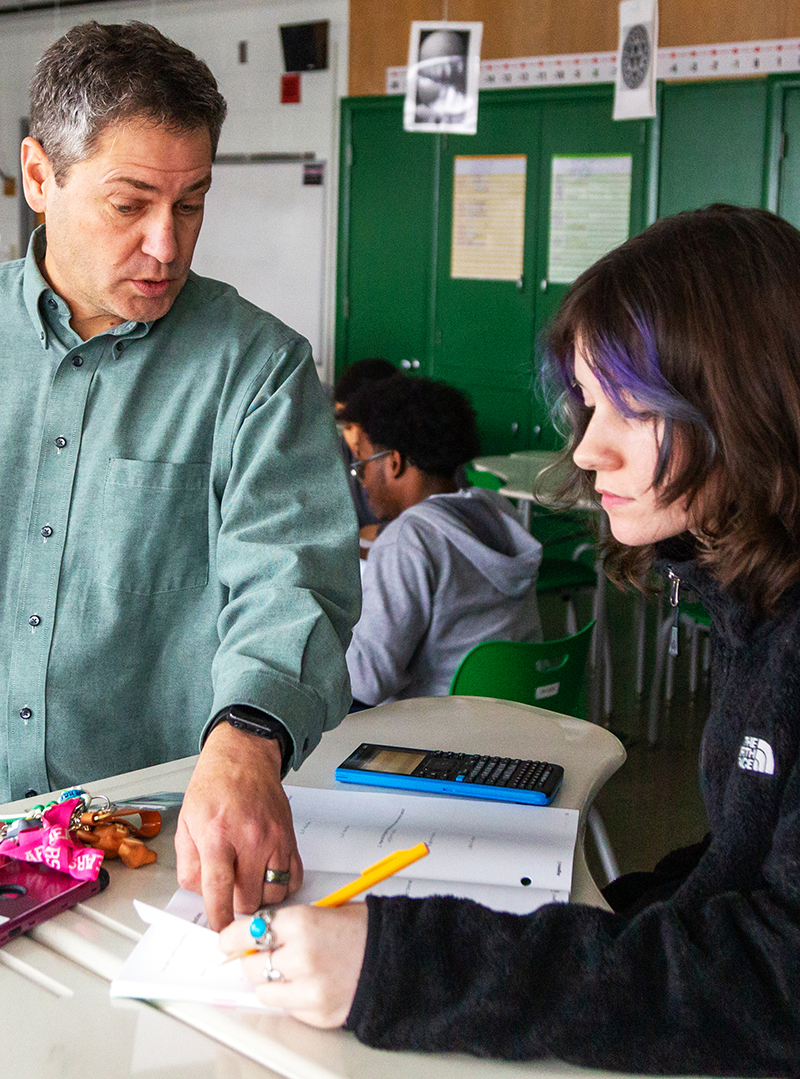
IM Math is designed so conceptual understanding and procedural fluency develop together, each strengthening the other. Students learn why a method works while they learn to use it, building speed and accuracy through practice that’s woven into every unit.
Daily routines build procedural fluency. Distributed practice—returning to key skills over time instead of drilling them once—strengthens automaticity while freeing up working memory for harder problems, so fluency holds up over time instead of fading after the test.
That’s what coherence looks like in practice: students build understanding and fluency together, with the curriculum reinforcing both over time. The result is stronger, more durable learning.
THE TAKEAWAY
Understanding and fluency are built to reinforce each other, and the results follow from that design.
See IM 9–12 Math v.360 in a real classroom
This is a real IM Math lesson, filmed in a real classroom, so you can see what problem-based instruction actually looks like in high school.
Algebra 1
An Algebra 1 class works through a problem together, comparing strategies and making connections across ideas before the teacher guides a synthesis.
Get IM Math v.360 for your school or district

Access IM Math for free
Access the complete IM Math curriculum online at no cost, including full lessons, printable PDFs, and implementation resources.

Explore enhanced print and digital options
Explore professionally printed materials, enhanced digital platforms, and implementation support for IM Math.
Need help choosing a path?
Tell us what your school or district needs, and we’ll help you identify the right option.
The team
Meet the IM 9–12 Math v.360 authors
IM 9–12 Math was developed by curriculum writers, classroom teachers, and mathematicians with deep experience in high school mathematics. The team includes Dr. Bill McCallum, a lead writer of the Common Core State Standards for Mathematics.

William G. McCallum
Cofounder and curriculum contributor

Kristin Umland
Cofounder and curriculum contributor
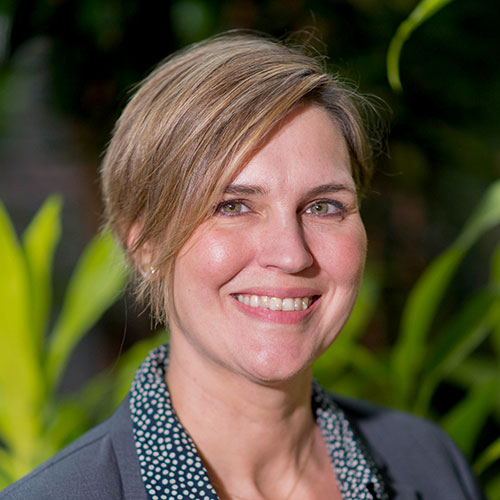
Kate Nowak
6–12 curriculum lead author

Yenche Tioanda
Algebra 1 lead

Tina Cardone
Geometry lead

Ashli Black
Algebra 2 lead

David Petersen
Statistics lead writer
Contributors
Enrique Acosta
Contributor
Jacqueline Bumler
Writer and editor
Monica Caplan
Editor
Cole Chase
Contributor
Lynn Frankel
Editor
Trisha Gilbreath
Writer
Melissa Hilty
Contributor
Jenn Marker
Writer
Shelley Mourtgos
Writer
Carrie Ott
Writer
Liz Ramirez
Implementation and access supports
Max Ray-Riek
Writer
Gabriel Rosenberg
Writer
Aaron Salley
Contributor
Pamela San Miguel
Editor
Veena Senra
Writer
Jim Setzer
Contributor
Lizzy Skousen
Writer
Writer
Siavash Tehrani
Contributor
Sonja Twedt
Writer