
What is problem-based instruction?
How students learn math in IM classrooms, and why lessons are designed this way.
In classrooms using IM® Math, students learn mathematics by doing mathematics. Lessons are built around problems students can reason about using what they already know. Teachers guide the work from start to finish, and make the key mathematical ideas clear and explicit in every lesson.
This approach is called problem-based instruction. It reflects decades of research on how students learn math, and it shapes every IM Math lesson from kindergarten through high school.
Problem-based instruction at a glance
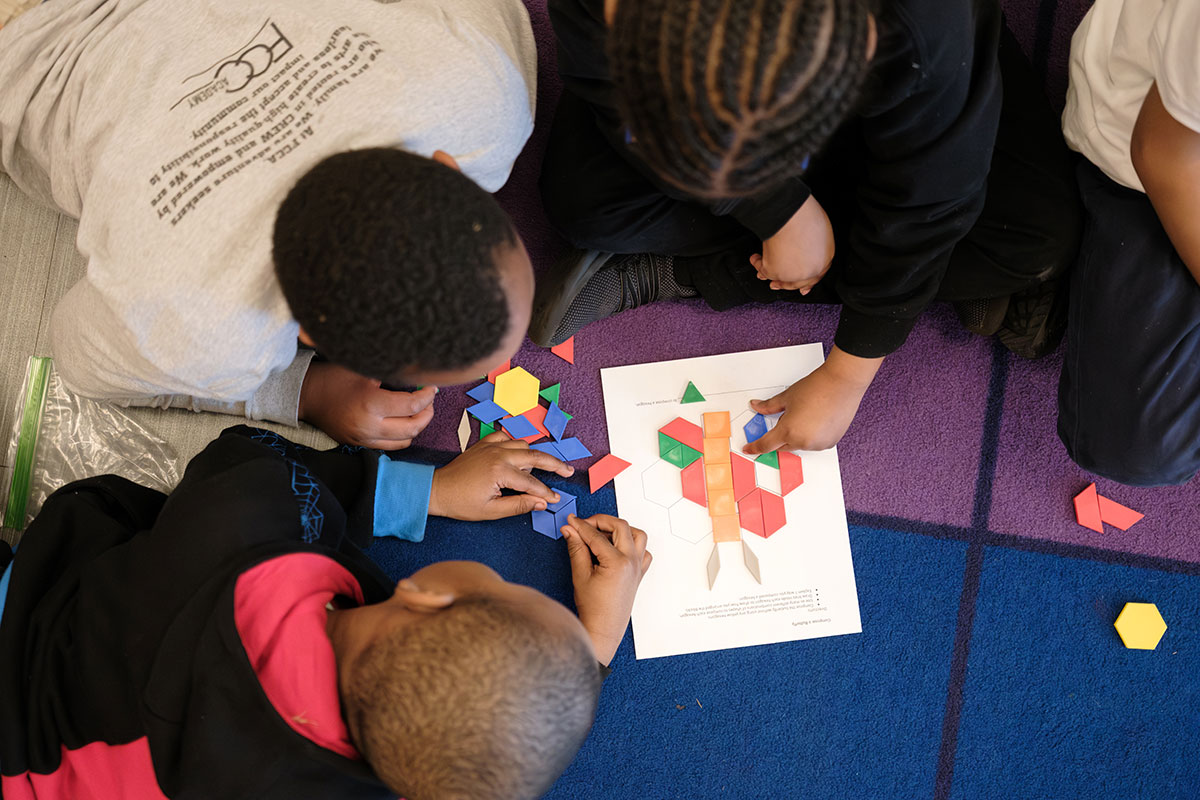
Students learn math by doing math.
Lessons are built around problems students can reason about, alone and with classmates, using what they already know.

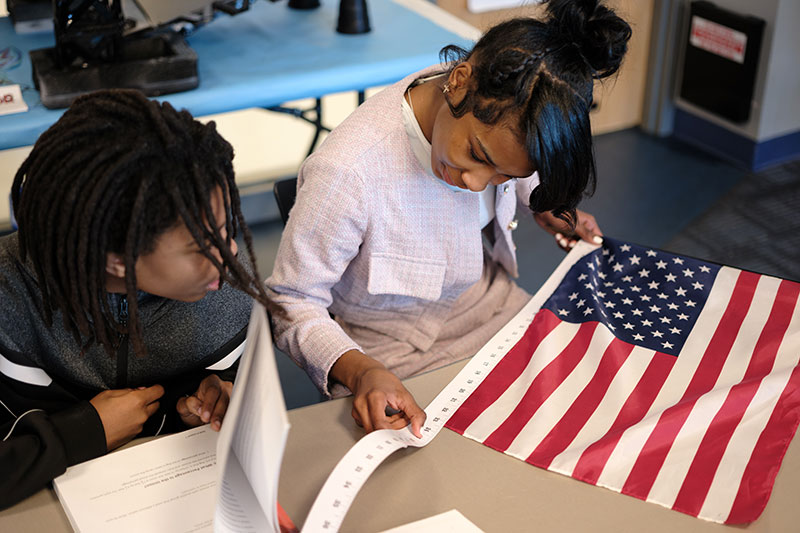
Teachers guide the work and make the key ideas explicit.
Teachers introduce each problem, ask purposeful questions, lead the discussion, and make the mathematics clear in every lesson.

Learning builds, lesson to lesson and grade to grade.
Each new idea builds on something students already understand, so they see how mathematical concepts connect rather than viewing math as a collection of disconnected topics.
What an IM Math lesson looks like
Every IM Math lesson follows the same intentional structure, so students and teachers always know what to expect.
Warm-up
A short opening activity activates what students already know and gets every student thinking.
Activities
The teacher introduces a problem and makes sure everyone understands what it is asking. Students work alone and with classmates, trying strategies and explaining their reasoning. The teacher listens, asks purposeful questions that move thinking forward, and selects ideas for the whole class to discuss. Activities end with the teacher helping students bring together what they’ve learned.
Lesson Synthesis
The teacher makes the key ideas and procedures explicit, often by leading a discussion that connects students’ thinking and work to the mathematics.

Cool-down
A short closing task shows the teacher what each student learned and informs the next day’s teaching.
Instructional routines like Notice and Wonder and Number Talks give discussions a predictable structure, so students can focus on the math instead of figuring out what to do next. In grades K–5, lessons also include centers, hands-on games and activities where students revisit and practice concepts they’ve learned.
What problem-based instruction means in IM Math
The term ‘problem-based instruction’ can be used to describe many ideas. Here is what it means in IM Math.
Teachers guide every lesson, start to finish.
Every problem in IM Math is carefully chosen so students can start with what they know. Teachers introduce the problem, ask purposeful questions, provide information and instruction along the way, and help students make connections as they work. As students reason through problems and explain their thinking, teacher guidance helps them build lasting mathematical understandings.
Explicit teaching is built into every lesson.
Teachers explicitly teach mathematical ideas and methods in IM Math lessons. They introduce vocabulary and notation, demonstrate conventions, and state key ideas clearly. Some ideas are taught directly at the outset. Often, though, students work on a problem first, and that work prepares them to make sense of the explanation that follows. Research on how students learn supports that sequence. Either way, the teacher brings the learning together by making the key mathematical ideas and procedures explicit.
Lessons are focused and sequenced.
Problem-based instruction organizes each lesson around carefully sequenced problems that build toward specific grade-level mathematics. Over the course of a 45- to 60-minute lesson, students work through these problems with teacher guidance, building understanding and making connections along the way. (This differs from project-based learning, where students may spend weeks or months investigating a single complex problem or challenge.)
Curriculum and professional learning support teachers' expertise.
Effective instruction draws on both teachers’ professional expertise and the resources available to them. IM Math provides detailed lesson plans, anticipated student responses, suggested questions, guidance for supporting a wide range of learners, and curriculum-aligned professional learning to support teachers in their work. Teachers use these resources alongside their own knowledge of their students to make instructional decisions, respond to student thinking, and help students develop mathematical understanding.
Do students still learn the standard algorithms?
Yes. Students learn the standard algorithms, and they learn why they work, so fluency holds up over time. In IM Math, conceptual understanding and procedural fluency develop together, reinforcing each other over time. In grades K–5, built-in centers give students regular, hands-on practice with concepts and skills from current and prior units. Daily routines build fact fluency, while practice problems in every lesson help students develop speed and accuracy by revisiting key skills over time rather than drilling them once.
Why IM Math is designed this way
Research shows that students learn math by solving problems and discussing their reasoning, as teachers guide them toward the key mathematical ideas (Hiebert et al., 1996; Hiebert & Grouws, 2007). The sequence matters: working on a problem first prepares students to make sense of the explicit instruction that follows (Schwartz & Bransford, 1998). As students connect mathematical ideas to methods and practice using them, they develop conceptual understanding and procedural fluency together (National Research Council, Adding It Up, 2001).
What families might notice
If your student is learning with IM Math, a few things may look different from the math class you remember.

Practice asks for reasoning.
Practice problems, whether done in class or at home, often ask students to explain their thinking or show more than one approach. Explaining why a method works is part of learning it.

Students talk about math. A lot.
Explaining their thinking, listening to a classmate’s strategy, and comparing approaches are how students build and test understanding.

“I’m not sure yet” is normal mid-lesson.
Students often work on problems before the teacher explains the key mathematical ideas. It’s normal for their understanding to develop over the course of the lesson, with the teacher bringing those ideas together at the end.

You do not need to teach the method yourself.
Every IM Math unit includes family support materials in plain language, and every grade’s course guide on AccessIM has an Information for Families page. All are free, with no login, and student and family materials are available in English and Spanish. If your student is stuck, try asking: What is the problem asking? What have you tried?
Explore family resources on AccessIM
See problem-based instruction in real classrooms
These are real IM Math lessons, filmed in real classrooms with real students and teachers, so you can see what problem-based instruction actually looks like at different grade bands.
Kindergarten
A kindergarten class makes sense of a new math idea together through play and discussion.
Grade 5
Grade 5 students work through a problem together, comparing strategies and justifying their thinking.
Algebra 1
An Algebra 1 class makes connections across ideas before the teacher guides a synthesis.
Get IM Math v.360 for your school or district

Access IM Math for free
Access the complete IM Math curriculum online at no cost, including full lessons, printable PDFs, and implementation resources.

Explore enhanced print and digital options
Explore professionally printed materials, enhanced digital platforms, and implementation support for IM Math.
Need help choosing a path?
Tell us what your school or district needs, and we’ll help you identify the right option.